Loneliness as a Public Health Crisis: Implications for Morbidity, Mortality, and Human Well-Being

by Catherina Pascale
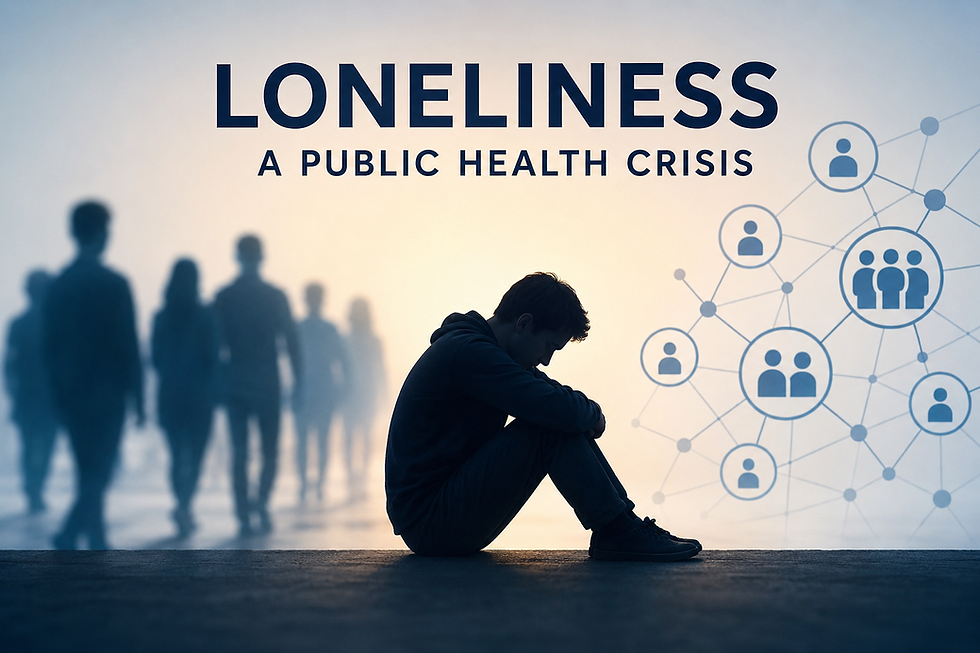
Abstract
Loneliness has emerged as one of the most significant public health challenges of the twenty-first century. Once regarded primarily as a personal emotional experience, loneliness is now recognized as a major determinant of physical health, mental health, quality of life, and longevity. The World Health Organization (WHO) recently reported that approximately one in six people worldwide experiences loneliness, with an estimated 871,000 deaths annually linked to loneliness and social isolation. Evidence indicates that loneliness increases the risk of cardiovascular disease, stroke, diabetes, depression, anxiety, cognitive decline, dementia, and premature mortality. The magnitude of this risk is comparable to established health threats such as smoking and obesity. This article reviews loneliness from a public health perspective, examining its definition, epidemiology, underlying mechanisms, risk factors, and consequences. It further explores why loneliness can be considered a disease-like condition and a global epidemic requiring coordinated responses from healthcare systems, governments, communities, and individuals. The evidence suggests that promoting social connection may represent one of the most important yet underutilized strategies for improving population health and reducing preventable morbidity and mortality.
Keywords: loneliness, social isolation, public health, mortality, mental health, social connection, prevention
Introduction
Human beings are inherently social. Throughout evolution, survival depended upon cooperation, social bonds, and belonging to a group. Consequently, social connection is not merely desirable but essential for health and well-being. When meaningful social relationships are absent or insufficient, individuals may experience loneliness, a condition increasingly recognized as a serious threat to public health.
Recent evidence indicates that loneliness extends far beyond emotional discomfort. It is associated with increased risks of chronic disease, mental illness, disability, healthcare utilization, and premature death. The consequences affect not only individuals but also families, communities, healthcare systems, and economies. The growing prevalence of loneliness has prompted researchers, clinicians, and policymakers to view it as a public health crisis requiring urgent attention.
The WHO Commission on Social Connection has identified loneliness and social isolation as major global concerns. According to its 2025 report, one in six people worldwide experiences loneliness, and loneliness is associated with more than 871,000 deaths annually, equivalent to approximately 100 deaths every hour (WHO, 2025). These findings suggest that loneliness has reached a level warranting comparison with other major public health threats.
Defining Loneliness
The WHO defines social connection as the ways in which individuals relate to and interact with other people. Within this framework, loneliness is defined as the painful feeling that arises from a discrepancy between desired and actual social connections, whereas social isolation refers to the objective absence or insufficiency of social relationships (WHO, 2025).
This distinction is important because loneliness and social isolation are related but separate constructs. An individual may live alone and have limited social contact without feeling lonely. Conversely, a person surrounded by others may still experience profound loneliness if relationships lack emotional depth or meaningful connection.
Holt-Lunstad (2021) similarly describes loneliness as a subjective negative experience resulting from inadequate meaningful relationships or from a gap between desired and actual levels of connection. Social isolation, in contrast, refers to objectively having few social relationships or infrequent social interactions.
Borjali and Taheri (2025) characterize loneliness as a subjective feeling of social isolation and disconnection that transcends age, gender, and socioeconomic status, affecting individuals throughout the lifespan.
These definitions collectively emphasize that loneliness is not simply being alone. Rather, it is a distressing psychological state characterized by unmet social and emotional needs.
Can Loneliness Be Considered a Disease?
Although loneliness is not currently classified as a disease within major diagnostic systems, growing evidence suggests that it possesses many characteristics commonly associated with disease states.
First, loneliness is associated with identifiable physiological changes. Research demonstrates that loneliness activates stress-related biological pathways, including the sympathetic nervous system and the hypothalamic-pituitary-adrenal axis. This activation leads to elevations in stress hormones, blood pressure, inflammatory processes, and immune dysregulation (Holt-Lunstad, 2021).
Second, loneliness produces measurable adverse health outcomes. Borjali and Taheri (2025) report that loneliness is associated with cardiovascular disease, dementia, depression, anxiety, sleep disturbances, impaired immune function, and increased mortality.
Third, loneliness follows patterns commonly observed in chronic disease processes. It can persist for years, progressively worsen, impair daily functioning, reduce quality of life, and increase susceptibility to additional health conditions. Furthermore, loneliness may initiate self-reinforcing cycles in which social withdrawal increases feelings of isolation, which in turn intensifies loneliness.
Finally, loneliness fulfills several criteria commonly used to identify public health conditions. It is highly prevalent, associated with substantial morbidity and mortality, creates significant economic burdens, and affects entire populations rather than isolated individuals.
For these reasons, loneliness may be viewed as a disease-like condition and, more importantly, as a major social determinant of health requiring clinical recognition and intervention.
Evidence That Loneliness Has Reached Epidemic Proportions
The term "epidemic" is generally reserved for conditions that affect large numbers of people and produce substantial health consequences. Several lines of evidence support describing loneliness as an epidemic.
The WHO Commission on Social Connection reported that approximately one in six people worldwide experiences loneliness (WHO, 2025). The burden is particularly pronounced among young people and individuals living in low-income countries.
Among individuals aged 13 to 29 years, between 17% and 21% report experiencing loneliness. The highest prevalence occurs among adolescents. In low-income countries, approximately 24% of individuals report loneliness, compared with approximately 11% in high-income countries (WHO, 2025).
The prevalence of social isolation is similarly concerning. WHO estimates suggest that social isolation affects approximately one-third of older adults and one-quarter of adolescents worldwide (WHO, 2025).
The consequences of this widespread social disconnection are substantial. WHO estimates that loneliness contributes to more than 871,000 deaths annually. This figure alone highlights the scale of the problem and supports its classification as a global public health emergency.
Research reviewed by Holt-Lunstad demonstrates that loneliness increases mortality risk by approximately 26%, social isolation by 29%, and living alone by 32%. These effects were identified in a meta-analysis involving more than 3.4 million participants.
Moreover, the mortality risk associated with loneliness is comparable to or greater than risks associated with physical inactivity, obesity, and air pollution. Holt-Lunstad notes that social factors may equal or exceed the health risks posed by many traditional lifestyle factors that receive substantial public health attention.
Borjali and Taheri similarly report findings from meta-analyses demonstrating a 26% to 29% increase in mortality risk among lonely individuals.
Taken together, these findings provide compelling evidence that loneliness has reached epidemic levels and should be regarded as a critical global health priority.
Social Changes Contributing to Loneliness
The rise of loneliness cannot be understood solely through individual factors. Broader societal changes have altered patterns of human interaction and social connectedness.
The WHO identifies multiple contributors, including urbanization, economic pressures, migration, inadequate community infrastructure, and changing family structures. Poor health, low income, low educational attainment, and living alone further increase vulnerability (WHO, 2025).
Digital technology presents both opportunities and challenges. While digital communication can facilitate contact across distances, WHO warns that excessive screen time and negative online interactions may undermine mental well-being and social connection, particularly among young people (WHO, 2025).
Holt-Lunstad further notes that major life transitions may increase susceptibility to loneliness. These include transitions into adulthood, parenthood, retirement, bereavement, employment changes, and declining physical health.
The cumulative effect of these social changes has created environments in which meaningful social relationships may be more difficult to establish and maintain, despite unprecedented opportunities for technological communication.
Risk Factors for Loneliness
Loneliness is a complex and multifactorial phenomenon that arises from the interaction of personal, social, economic, and environmental factors. Although anyone can experience loneliness, certain populations appear particularly vulnerable.
According to the WHO Commission on Social Connection, loneliness disproportionately affects adolescents, young adults, older adults, migrants, refugees, individuals with disabilities, LGBTQ+ populations, indigenous communities, and ethnic minorities. Structural barriers, discrimination, social exclusion, and reduced access to social opportunities contribute significantly to these disparities (WHO, 2025).
Holt-Lunstad (2021) identifies several risk factors associated with loneliness and social isolation, including physical illness, mental health disorders, low income, low educational attainment, unmarried status, and living alone. Major life transitions, such as retirement, bereavement, changes in employment, declining health, and relocation, may also increase vulnerability.
Importantly, loneliness is not confined to any single demographic group. Holt-Lunstad emphasizes that loneliness can occur across all ages, socioeconomic levels, living arrangements, and genders.
Borjali and Taheri similarly note that loneliness transcends age, gender, and socioeconomic status, affecting individuals throughout the lifespan.
The universality of loneliness underscores the importance of recognizing it as a population-wide concern rather than a problem limited to specific subgroups.
Symptoms and Clinical Manifestations
Unlike many medical conditions, loneliness lacks a definitive laboratory test or diagnostic marker. Instead, it manifests through a constellation of emotional, behavioral, cognitive, and physical symptoms.
At the emotional level, loneliness is characterized by persistent feelings of emptiness, sadness, disconnection, exclusion, and lack of belonging. Individuals may feel misunderstood, unsupported, or emotionally distant from others despite being physically surrounded by people.
Behaviorally, loneliness often contributes to social withdrawal, reduced participation in community activities, diminished motivation to engage with others, and avoidance of social situations. Borjali and Taheri describe loneliness as creating a self-perpetuating cycle in which social withdrawal further deepens feelings of isolation.
Cognitive manifestations may include:
Negative self-perception
Reduced self-esteem
Increased rumination
Feelings of hopelessness
Heightened sensitivity to rejection
Difficulty concentrating
Physically, lonely individuals frequently report fatigue, poor sleep quality, low energy, and increased stress-related symptoms. Research reviewed by Borjali and Taheri found consistent associations between loneliness and sleep disturbances, including insomnia and reduced sleep quality.
Although these symptoms are not specific to loneliness, their persistence may indicate clinically significant social disconnection requiring assessment and intervention.
Biological Mechanisms Linking Loneliness to Disease
The growing recognition of loneliness as a public health threat stems largely from advances in understanding its biological effects.
Historically, loneliness was viewed primarily as an emotional experience. Contemporary research demonstrates that loneliness triggers measurable physiological responses that can negatively affect multiple organ systems.
Holt-Lunstad explains that humans evolved as social beings whose survival depended upon cooperation and group membership. Consequently, social disconnection activates threat-detection systems within the brain and body.
When loneliness is experienced, the central nervous system initiates a stress response involving activation of:
The sympathetic nervous system
The hypothalamic-pituitary-adrenal (HPA) axis
Neuroendocrine stress pathways
These responses increase the production of stress hormones and inflammatory mediators. Over time, chronic activation may contribute to physiological wear and tear across multiple bodily systems.
Borjali and Taheri report that loneliness is associated with:
Elevated cortisol levels
Dysregulated stress responses
Chronic inflammation
Impaired immune function
Increased vulnerability to illness and infection
These biological disturbances provide a plausible explanation for the broad range of health conditions associated with chronic loneliness.
Loneliness and Mental Health
One of the most consistently documented consequences of loneliness is its detrimental impact on mental health.
The WHO reports that lonely individuals are approximately twice as likely to experience depression compared with those who maintain adequate social connections (WHO, 2025). Loneliness is also associated with anxiety, emotional distress, self-harm, and suicidal thoughts.
Borjali and Taheri identify a bidirectional relationship between loneliness and depression. Loneliness increases the risk of depressive symptoms, while depression may further intensify social withdrawal and feelings of disconnection.
This reciprocal relationship creates a cycle in which emotional suffering and social isolation reinforce one another.
Mental health consequences associated with loneliness include:
Depression
Loneliness is a strong predictor of depressive symptoms and major depressive episodes. Feelings of social exclusion and lack of belonging may contribute to hopelessness, low self-worth, and emotional distress.
Anxiety
Lonely individuals frequently experience heightened anxiety, particularly in social situations. Fear of rejection and negative self-evaluation may further reduce social engagement.
Suicidality
Holt-Lunstad identifies loneliness and social isolation as predictors of suicide risk. Social disconnection may reduce protective factors that normally buffer individuals against psychological crises.
Addiction and Behavioral Health Problems
Evidence reviewed by Holt-Lunstad suggests associations between loneliness and increased risk of substance misuse and other maladaptive coping behaviors.
Collectively, these findings suggest that loneliness should be considered a significant mental health risk factor requiring early recognition and intervention.
Physical Health Consequences
The health effects of loneliness extend well beyond emotional well-being.
The WHO reports that loneliness increases the risk of several major noncommunicable diseases, including:
Heart disease
Stroke
Diabetes
Premature mortality
Cognitive decline
(WHO, 2025)
Borjali and Taheri's review similarly found consistent associations between loneliness and multiple adverse physical health outcomes.
Cardiovascular Disease
Cardiovascular disease is among the most extensively studied consequences of loneliness.
Borjali and Taheri report evidence demonstrating:
A 29% increased risk of coronary heart disease
A 32% increased risk of stroke
among individuals experiencing loneliness.
Potential mechanisms include:
Elevated blood pressure
Chronic inflammation
Increased sympathetic nervous system activity
Unhealthy lifestyle behaviors
These factors collectively contribute to increased cardiovascular risk.
Immune Dysfunction
Loneliness has been associated with impaired immune functioning.
Both Borjali and Taheri and Holt-Lunstad describe evidence showing that socially disconnected individuals exhibit altered immune responses and increased susceptibility to infections.
Research cited by Holt-Lunstad found that individuals experiencing loneliness demonstrated weaker antibody responses following influenza vaccination and greater susceptibility to respiratory illnesses.
These findings suggest that social connection may play an important role in maintaining immune competence.
Sleep Disturbances
Sleep is essential for both physical and mental health.
Borjali and Taheri report that loneliness is associated with insomnia, poor sleep quality, and disrupted sleep patterns.
Persistent sleep disruption may further contribute to:
Cardiovascular disease
Metabolic dysfunction
Depression
Cognitive impairment
thereby amplifying the overall health burden associated with loneliness.
Cognitive Decline and Dementia
Emerging evidence suggests that loneliness may adversely affect brain health.
Borjali and Taheri report associations between loneliness, cognitive decline, dementia, and Alzheimer's disease.
Potential mechanisms include:
Chronic stress exposure
Reduced cognitive stimulation
Inflammatory processes
Unhealthy lifestyle behaviors
Over time, these factors may accelerate neurodegenerative changes and impair cognitive functioning.
Loneliness and Mortality
Perhaps the most compelling evidence supporting loneliness as a public health priority is its association with premature death.
Meta-analytic evidence cited by Holt-Lunstad found that loneliness increases mortality risk by approximately 26%, social isolation by 29%, and living alone by 32%.
Similarly, Borjali and Taheri report mortality increases ranging from 26% to 29% among lonely individuals.
The WHO estimates that loneliness contributes to more than 871,000 deaths globally each year (WHO, 2025).
These statistics place loneliness among the most significant modifiable risk factors affecting human health and longevity.
Economic and Societal Consequences of Loneliness
The consequences of loneliness extend beyond individual suffering and clinical outcomes. Increasing evidence indicates that loneliness imposes substantial economic and societal costs that affect healthcare systems, educational institutions, workplaces, and communities.
The WHO Commission on Social Connection emphasizes that loneliness and social isolation contribute to increased healthcare expenditures, reduced educational attainment, diminished workforce participation, and lower productivity (WHO, 2025). These consequences accumulate across the lifespan and create significant burdens for society.
At the educational level, WHO reports that adolescents experiencing loneliness are approximately 22% more likely to attain lower grades or qualifications compared with their socially connected peers (WHO, 2025). Social disconnection during formative years may adversely affect concentration, motivation, emotional well-being, and academic engagement.
The workplace is similarly affected. Adults experiencing loneliness may encounter greater difficulty obtaining and maintaining employment and may experience lower earnings over time (WHO, 2025). Reduced social support, diminished confidence, and poorer mental health may contribute to these outcomes.
Healthcare systems also bear substantial costs. Holt-Lunstad reports that social isolation among older adults has been associated with billions of dollars in annual healthcare expenditures, including increased Medicare spending in the United States. Increased healthcare utilization may result from higher rates of chronic disease, mental health conditions, hospital admissions, and long-term care needs.
Beyond economics, loneliness weakens social cohesion. Communities characterized by strong social bonds tend to be healthier, safer, and more resilient, particularly during periods of crisis or disaster. Conversely, widespread social disconnection may undermine trust, civic engagement, and collective well-being (WHO, 2025).
When Should Individuals Seek Help?
Although transient feelings of loneliness are a normal part of human experience, persistent or severe loneliness may require professional attention.
Individuals should consider seeking help when loneliness:
Persists for weeks or months despite attempts to improve social engagement.
Causes significant emotional distress.
Interferes with work, education, family life, or daily functioning.
Leads to social withdrawal and avoidance of relationships.
Is accompanied by symptoms of depression or anxiety.
Contributes to sleep disturbances, fatigue, or declining physical health.
Results in thoughts of self-harm or suicide.
The WHO emphasizes that loneliness should not be dismissed as a trivial emotional state. Given its documented associations with serious health outcomes, persistent loneliness warrants recognition as a legitimate health concern (WHO, 2025).
Holt-Lunstad further argues that healthcare professionals should routinely assess social connection as part of standard medical care, recognizing loneliness as a significant risk factor for morbidity and mortality.
Early intervention may prevent progression toward more severe psychological and physical health consequences.
Where Should Individuals Seek Help?
Addressing loneliness requires a multifaceted approach involving healthcare providers, community organizations, and social networks.
Primary Healthcare Providers
Physicians, nurse practitioners, psychologists, and other healthcare professionals represent important points of contact for individuals experiencing persistent loneliness.
According to Holt-Lunstad, clinicians should routinely assess social connection, identify individuals at risk, and provide appropriate referrals or interventions.
Healthcare professionals can also evaluate whether loneliness is occurring alongside:
Depression
Anxiety disorders
Cognitive impairment
Chronic illness
Sleep disturbances
Substance misuse
and coordinate appropriate treatment.
Mental Health Services
Psychologists, counselors, and psychotherapists may assist individuals in addressing emotional, cognitive, and behavioral factors contributing to loneliness.
Evidence cited by Holt-Lunstad suggests that cognitive-behavioral approaches may be beneficial, particularly when loneliness is associated with depression or maladaptive patterns of thinking.
Community Organizations
Community-based resources may provide opportunities for meaningful social engagement.
Examples include:
Volunteer organizations
Social clubs
Educational programs
Faith-based organizations
Recreational groups
Senior centers
Cultural organizations
The WHO highlights the importance of strengthening social infrastructure, including parks, libraries, community centers, and public gathering spaces that facilitate interpersonal connection (WHO, 2025).
Evidence-Based Strategies for Addressing Loneliness
Research indicates that loneliness can be reduced through interventions operating at individual, community, healthcare, and policy levels.
Strengthening Existing Relationships
One of the most effective approaches involves improving the quality and frequency of meaningful social interactions.
The WHO encourages simple but powerful actions such as:
Reaching out to friends and family members.
Engaging fully in conversations without digital distractions.
Greeting neighbors.
Participating in community activities.
Offering support to others.
(WHO, 2025)
These actions may help strengthen social bonds and foster a greater sense of belonging.
Physical Activity and Healthy Lifestyle Behaviors
Holt-Lunstad reports evidence suggesting that individuals who engage in healthy behaviors—including regular physical activity, healthy eating patterns, and adequate sleep—are less likely to experience loneliness.
Physical activity may provide dual benefits by improving physical health while simultaneously creating opportunities for social interaction.
Mindfulness-Based Interventions
Mindfulness-based interventions have demonstrated promise in reducing loneliness.
Research cited by Holt-Lunstad indicates that mindfulness training may reduce feelings of loneliness while increasing social engagement and social contact.
Potential mechanisms include:
Enhanced emotional regulation
Reduced stress reactivity
Greater self-awareness
Increased openness to social interaction
Gratitude and Positive Social Engagement
Expressions of gratitude and prosocial behavior have also been associated with reductions in loneliness.
Holt-Lunstad cites evidence suggesting that gratitude interventions may strengthen social bonds and improve well-being.
Similarly, providing support to others may offer greater benefits than merely receiving support, highlighting the importance of reciprocal social relationships.
Volunteering and Community Participation
Community participation represents another promising intervention.
Research reviewed by Holt-Lunstad found that volunteering, joining social groups, interacting with neighbors, and spending time outdoors are associated with lower levels of loneliness and greater feelings of companionship.
These activities may strengthen social identity and increase opportunities for meaningful interpersonal relationships.
Policy and Public Health Responses
Given the scale of the problem, individual-level interventions alone are unlikely to be sufficient.
The WHO Commission on Social Connection has proposed a comprehensive roadmap for action centered on five key priorities:
Policy development
Research advancement
Evidence-based interventions
Improved measurement and surveillance
Public engagement and awareness
(WHO, 2025)
A major objective involves integrating social connection into public policy in the same manner as other determinants of health.
The WHO also supports the development of a global Social Connection Index to improve monitoring and facilitate international comparisons (WHO, 2025).
In May 2025, the World Health Assembly adopted the first global resolution addressing social connection, urging member states to implement evidence-based policies and programs aimed at strengthening social connectedness and reducing loneliness (WHO, 2025).
These developments represent important milestones in the recognition of loneliness as a global health priority.
Conclusion
Loneliness has emerged as one of the defining public health challenges of the modern era. Once viewed primarily as an emotional experience, it is now recognized as a significant determinant of health, well-being, and longevity. The evidence reviewed in this article demonstrates that loneliness is associated with increased risks of depression, anxiety, cardiovascular disease, stroke, diabetes, cognitive decline, dementia, immune dysfunction, and premature mortality.
The WHO estimates that one in six people worldwide experiences loneliness and that more than 871,000 deaths annually may be attributable to loneliness and social isolation. These findings, combined with evidence demonstrating mortality risks comparable to or exceeding those associated with several traditional health risk factors, support the characterization of loneliness as a global epidemic.
The causes of loneliness are multifactorial and include social, economic, environmental, and individual influences. Although certain populations face elevated risks, loneliness affects individuals across all demographic groups and stages of life.
Importantly, loneliness is neither inevitable nor irreversible. Evidence suggests that strengthening social connection through individual behavioral changes, community engagement, healthcare interventions, and supportive public policies can improve health outcomes and enhance quality of life.
Addressing loneliness requires a shift in perspective. Social connection should no longer be regarded as merely a desirable aspect of life but as a fundamental component of health. As healthcare systems, policymakers, researchers, and communities increasingly recognize the importance of social connection, opportunities emerge to reduce the burden of loneliness and promote healthier, more connected societies.
References
Borjali, A., Taheri, H. (2025). Loneliness as a Public Health Issue: Implications, Challenges, and Future Directions. Clinical Psychology Studies, 16(58), 1-8. https://doi.org/10.22054/jcps.2024.82090.3141
Holt-Lunstad J. (2021). Loneliness and Social Isolation as Risk Factors: The Power of Social Connection in Prevention. American journal of lifestyle medicine, 15(5), 567–573. https://doi.org/10.1177/15598276211009454
World Health Organization. (2025, 30 June).Social Connection linked to improved health and reduced risk of early death. https://www.who.int/news/item/30-06-2025-social-connection-linked-to-improved-heath-and-reduced-risk-of-early-death
Assessed and Endorsed by the MedReport Medical Review Board