Cutting off supply: is there a way to “starve” tumors?
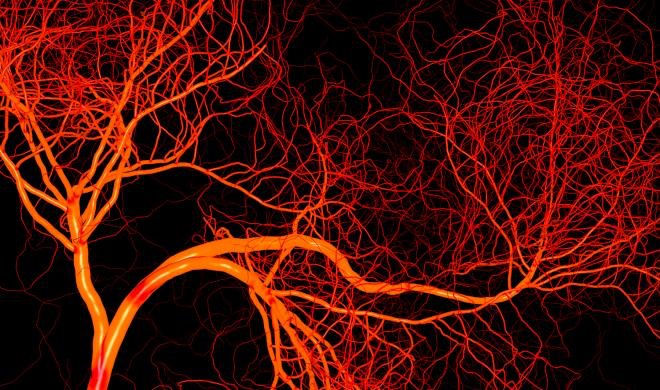
Image obtained from https://angio.org/about-angiogenesis/
Think of a tumor as a fast-growing city. To sustain a rising population, it needs new roads to bring in essential supplies. These roads take the form of blood vessels, transporting oxygen and nutrients to feed the growing tumor. Tumors have the ability to construct these roads or vessels at a very fast rate, but what if we could halt construction by cutting off supply from the outside? Instead of attacking the city directly, could we lay siege to it? Researchers are aiming to target the supply of blood to cancer cells by blocking their ability to make new blood vessels.
What is Angiogenesis?
Angiogenesis is the process of forming new blood vessels in your body. It’s a normal and regulated process that happens during wound healing to restore blood supply, and during development of an embryo when the cardiovascular system is first formed (Dudley & Griffioen, 2023).
However, this process becomes uncontrolled in cancer. Like all cells, cancer needs access to the blood for oxygen and nutrients in order to grow. Initially this is obtained easily from blood vessels in the tumor’s local environment. Later, as the tumor grows beyond 1-2 mm in diameter, the local resources can’t meet its needs. The middle of the growing tumor experiences a reduced supply of oxygen, a condition called hypoxia, and begins to starve (Liu et al., 2023). In response to this, cancer cells have a special way of accessing an extra supply of oxygen and nutrients by activating the process of angiogenesis. They initiate this growth by sending out chemical signals to stimulate the creation of these new blood vessels which exist to serve and deliver supplies to the tumor. One of the main chemical signals that kick-starts angiogenesis is Vascular Endothelial Growth Factor, or VEGF (Liu et al., 2023). The VEGF signal reaches blood vessels in the nearby area, causing them to build new branches, a bit like side roads, that stretch towards the tumor to supply it.
Abnormal vessels and cancer spread
These newly formed blood vessels, however, are usually poorly made, unstable, disorganized and leaky (Dudley & Griffioen, 2023). Despite this, the new vessels function well enough to serve their purpose. Not only is angiogenesis necessary to support the needs of increasingly aggressive cancer cells that consume a lot of energy, but it is also critical for the cancer to progress from a small tumor at one site in the body, to an invasive one that can spread to other parts of the body.
Usually, blood vessels are strong and well-built like smooth roads. They let small things like oxygen and nutrients pass through but normally keep whole cells inside. Blood vessels made for cancer cells however, are unstable and badly built, more like roads full of potholes. Their leakiness means that cancer cells from the tumor can more easily push their way through the walls of the blood vessels and access the bloodstream. Once cancer cells are in the general circulation, they can be transported to other organs of the body and start a secondary tumor or metastasis (Bielenberg & Zetter, 2015).
Anti-angiogenesis therapies
Since angiogenesis plays an important role in cancer progression, it's a key target for cancer treatment. Therapies aim to stop tumors from forming new blood vessels by interfering with the signals that normally tell blood vessels to grow. Examples are antibodies that bind to and block VEGF, one of the chemical signals that kickstarts angiogenesis. Bevacizumab (Avastin) is a drug that works in this way (Dudley & Griffioen, 2023).
Other therapies prevent these signals from being received by blocking the receptors and pathways involved in blood vessel growth. In other words, these drugs stop the message to start angiogenesis from being delivered properly so new blood vessels aren’t made. The drug Sunitinib is an example of this type of therapy, as it interferes with several signals needed for angiogenesis and tumor growth (Dudley & Griffioen, 2023).
The paradox of blood vessel normalization
Rather than simply shutting down a tumor’s blood supply, anti-angiogenic therapies remove the weakest and most abnormal blood vessels, many of which are leaky and inefficient. As these fragile vessels are lost, the remaining blood vessels tend to be the more stable and better-supported and can then function more efficiently. This is called vessel normalization and it’s much like removing side roads to minimize traffic interruptions along the main road. This results in a temporary improvement in blood flow and delivery of oxygen to the tumor, despite an overall reduction in the number of blood vessels. Although this may seem counterintuitive, this short-term improvement could be beneficial, as more even blood supply could make delivery of anti-cancer drugs like chemotherapy to the tumor much easier, as well as helping immune cells from the blood access the tumor to attack it (Dudley & Griffioen, 2023). Pre-clinical and clinical studies have shown benefit of this vessel normalization to enhance the effects of immunotherapy treatments (Li & Fang, 2024).
Although blood supply is temporarily improved in these remaining vessels, it still doesn’t meet the demands of a growing tumor; since the tumor cannot make new vessels needed for it to expand, this therapy could halt the tumor’s growth and put it under stress of starvation, weakening it further and making it more vulnerable to other treatments.
However, tumors often become resistant to these therapies. This is because they can find other ways to access a supply of blood, such as by hijacking existing blood vessels instead of growing new ones (Lugano et al., 2019). They can also adapt by using alternative chemical signals to stimulate new blood vessel growth when VEGF is blocked (Lopes-Coelho et al., 2021). On top of this, under stress of low oxygen levels, the cells within a tumor can adapt and switch on backup survival programs that lead to the tumor becoming even more aggressive and resistant to treatment. For this reason, anti-angiogenic therapies are most effective when carefully timed to exploit the brief period of improved blood flow in order to attack the tumor with other treatments like chemotherapy and immunotherapies, before resistance develops. Improvement of these anti-angiogenic drugs to overcome resistance is an active area of research (Majidpoor & Mortezaee, 2021).
Anti-angiogenic therapies work by interrupting a tumor’s ability to make new blood vessels needed for growth. Instead of completely cutting off blood supply, these therapies could temporarily improve blood flow through existing vessels, helping other cancer treatments access the tumor better. By also preventing new blood vessels from being made, they could slow tumor growth over time as well. While they don’t cure cancer on their own, anti-angiogenic therapies have been shown to complement or enhance other therapies in certain cancer types.
References:
Bielenberg, D. R., & Zetter, B. R. (2015). The Contribution of Angiogenesis to the Process of Metastasis. Cancer Journal, 21(4), 267–273.
Dudley, A. C., & Griffioen, A. W. (2023). Pathological angiogenesis: mechanisms and therapeutic strategies. Angiogenesis, 26(3), 313–347.
Li, A.-Q., & Fang, J.-H. (2024). Anti-angiogenic therapy enhances cancer immunotherapy: Mechanism and clinical application. Interdisciplinary Medicine, 2(1).
Liu, Z. L., Chen, H. H., Zheng, L. L., et al. (2023). Angiogenic signaling pathways and anti-angiogenic therapy for cancer. Signal Transduction and Targeted Therapy, 8, 198.
Lopes-Coelho, F., Martins, F., Pereira, S. A., & Serpa, J. (2021). Anti-Angiogenic Therapy: Current Challenges and Future Perspectives. International Journal of Molecular Sciences, 22(7), 3765.
Lugano, R., Ramachandran, M., & Dimberg, A. (2019). Tumor angiogenesis: Causes, consequences, challenges and opportunities. Cellular and Molecular Life Sciences, 77(9), 1745–1770.
Majidpoor, J., & Mortezaee, K. (2021). Angiogenesis as a hallmark of solid tumors – clinical perspectives. Cellular Oncology, 44, 715–737.
Assessed and Endorsed by the MedReport Medical Review Board