


Oral Cancer
By: Jessica Chhoy

What is oral cancer?
Oral cancer is also known as mouth cancer, which it can develop in many areas of the mouth. Some areas include the lips, gums, tongue, and inner linings of the cheeks.
Causes
The cause of oral cancer is complex. The cells in our mouth care called squamous cells which they line our mouth and throat. When squamous cells undergo DNA mutations the cells begin to grow and multiply rapidly within the mouth. The DNA mutations cause the squamous cells to become cancerous, and when they multiply rapidly this is how oral cancer would spread.
Symptoms
Patches can be a symptom mistaken for oral cancer, but they can be a sign of pre-cancer. These are a few examples of patches that are NOT oral cancer.
Leukoplakia - flat white or grey patches
Erythroplakia - slightly raised or flat red patches
Erythroleukoplakia - red and white patches
Difficulty moving your tongue or jaw
Sores or irritation that won't heal after some time of waiting
Diagnosis
Often times when we go visit the dental office for a regular check-up they will perform a physical examination. Dentists preform this examination by looking inside the mouth and feeling areas around the mouth such as the neck. They examine these areas for any signs of pre-cancer or cancer.
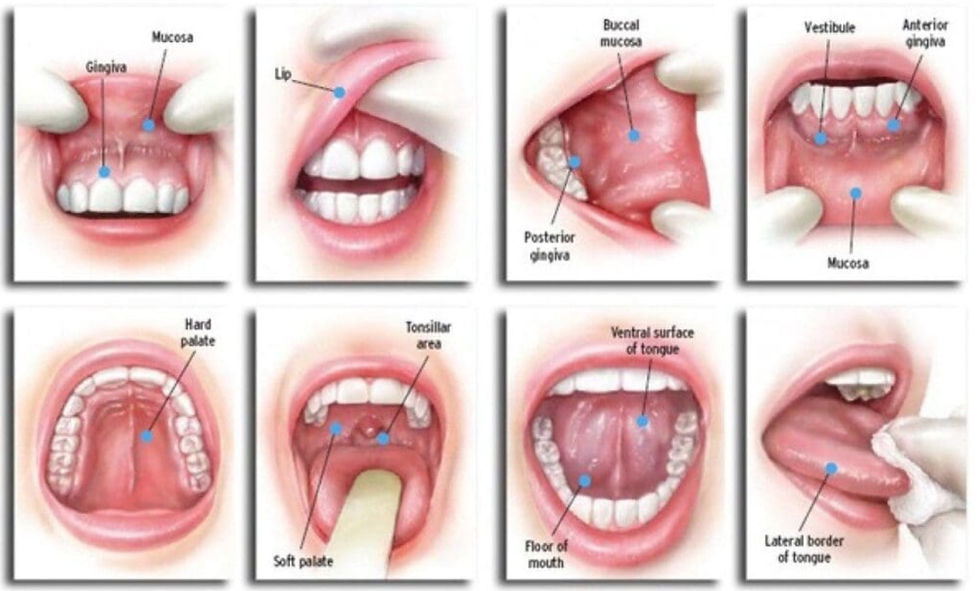
If there are any areas with possible signs of pre-cancer or cancer, dentists may perform a brush biopsy. This is where they use a brush or spatula to scrape the area of concern to obtain the cells that may potentially be cancerous. Once they obtain the cells, they examine it to see if there is any cancer present. This diagnosis can help detect oral cancer early and help patients seek treatment as soon as possible.
Treatment
Surgery is the most common treatment for oral cancer. Although surgery is not always necessary for every patient there will likely be some sort of surgical aspect to remove cancerous tumor. By removing the cancerous tumor, it would prevent the cancer from growing, spreading, and possibly progressing to become worse.
Chemotherapy is another treatment that is often used after oral surgery. It works by by using chemicals to kill cancer cells. After a patient receives oral surgery their dentists may suggest chemotherapy to ensure that no cancer cells remain. However, there are side effects that come with chemotherapy such as nausea and hair loss.
Prevention
The cause of oral cancer is complex as it involves many factors within our DNA. Although we can't necessarily control what happens within our DNA, we can control our lifestyle habits to reduce DNA damage.
Lifestyle habits to reduce DNA damage
Avoid tobacco usage
Limit alcohol consumption
Have regular dental check-ups
References
Assessed and Endorsed by the MedReport Medical Review Board

