Natural Killer (NK) Cells: Emerging Breakthroughs in Cancer Treatment

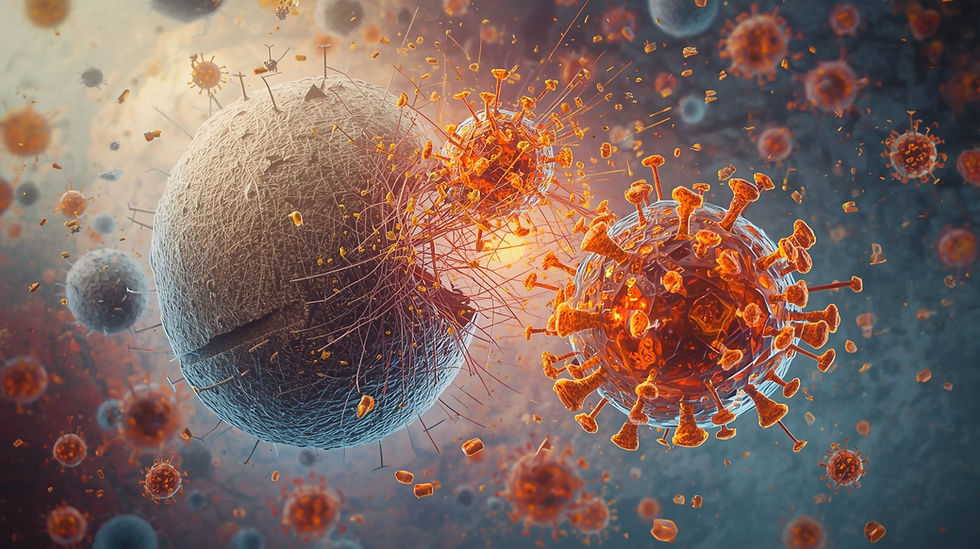
Natural Killer cells are part of the body’s innate immune system. Think of them as fast-acting armed guards—they’re the body’s first responders to threat. Scientists are working on turning these cells into something more akin to trained assassins. Numerous and diverse studies are being conducted around the world to use them against cancer. (1, 11)
NK cells got their name in 1975 when Swedish researchers discovered them in mice. What made them unique was their ability to quickly recognize and destroy leukemia cells. (2, 3) A year later, Canadian scientists identified them in humans. (4)
Over the next several decades, scientists studied how NK cells identify targets. Sometimes it’s because infected and cancerous cells are missing specific surface molecules. (5) These surface molecules are like authorized ID badges that tell NK cells, No trouble here. Other times, compromised cells have a surface molecule that healthy cells wouldn’t have. (6) In this case, sick cells are basically waving a red flag to signal their own destruction.
Researchers identified activating and inhibitory receptors, and mapped the signaling pathways that govern NK cell behavior. When a compromised cell is targeted, NK cells release perforin to create holes in its membrane. They then release granzymes, which enter the cell and trigger its death. (7, 8, 11)
Meanwhile, major technological advances—such as innovations in gene editing and the development of induced pluripotent stem cells (iPSCs)—have opened up a world of possibilities. Current NK cell research draws on advances made in Chimeric Antigen Receptor (CAR)-T cell therapy, which was approved for the treatment of leukemia in 2017. In this personalized form of immunotherapy, a patient’s own cells are removed, modified, mass-reproduced, then given back to the patient to treat their cancer. The T cells are basically reprogrammed to target the patient’s specific type of cancer. (9)
At present, CAR-T therapy is only approved for certain types of blood cancer, and only in cases that are relapsed or refractory. (10) It’s a very expensive treatment and has serious, potentially fatal, side effects. Studies indicate that using NK cells in place of T cells offers several significant advantages. (11, 12)
CAR-NK cells don’t trigger dangerous immune responses (such as severe cytokine release syndrome and graft-versus-host disease) that CAR-T cells do, making them safer and easier to administer. Unlike T cells, NK cells can be derived from universal donor cord blood or iPSCs, making them more cost-effective. Additionally, CAR-NK has the potential to treat tumorous cancers as well as blood cancers. As of 2025, studies involving pancreatic, ovarian, lung, stomach, prostate, colorectal, kidney, bone and liver cancer were ongoing. (11, 12)
Researchers hope to use NK cells to create “off-the-shelf” cancer treatments that are available for immediate use. (13) This would make advanced life-saving therapeutics more accessible and affordable to patients, and allow for earlier intervention.
References
Assessed and Endorsed by the MedReport Medical Review Board