General Anesthesia vs. Sedation: What’s the Difference?

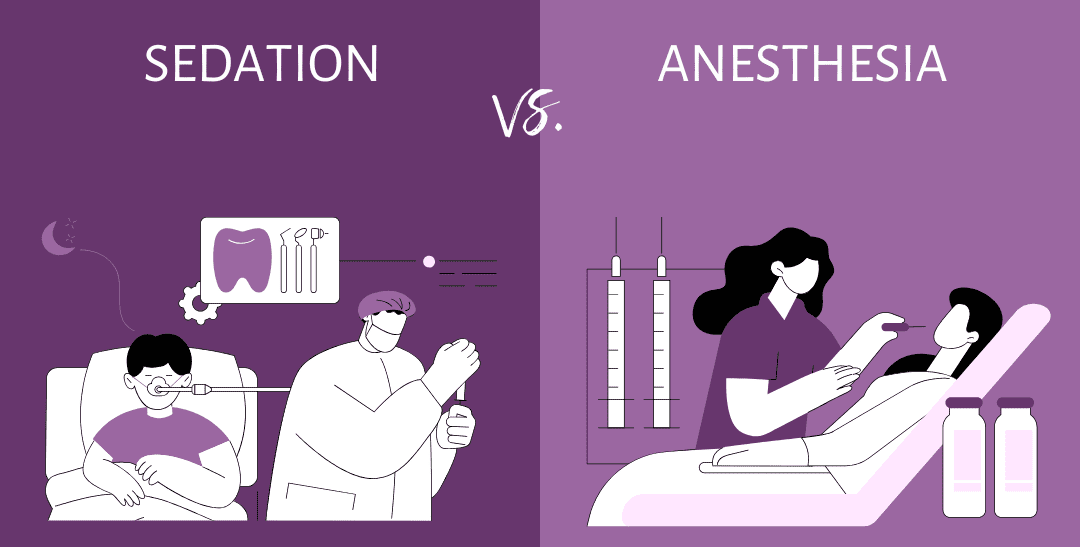
If you have ever undergone a colonoscopy, dental procedure, or surgery, you may have been told that you would be “sedated” or “put under.” Although these phrases are often used interchangeably in everyday conversation, sedation and general anesthesia are not the same thing.
Both involve medications that help patients remain comfortable during medical procedures, but they differ in how deeply they affect consciousness, breathing, responsiveness, and recovery. Understanding these differences can make an upcoming procedure feel less uncertain and help patients know what to expect.
What Is Sedation?
Sedation uses medications to help a patient relax, become sleepy, and tolerate a procedure more comfortably. Depending on the amount and type of medication used, a person may remain fully awake, drift in and out of sleep, or remember very little about the procedure afterward.
Importantly, sedation is not one single state. It exists along a continuum and is generally divided into three levels:
Minimal sedation: The patient is relaxed but awake and can normally respond to questions or instructions.
Moderate sedation: Sometimes called “conscious sedation,” moderate sedation makes a patient sleepier. The patient can still respond purposefully to verbal commands or gentle touch, although they may remember little about the procedure.
Deep sedation: The patient is very sleepy and is not easily awakened but can still respond purposefully after repeated or stronger stimulation. At this depth, breathing can become impaired and airway support may sometimes be necessary.
Sedation is commonly used for shorter or less invasive procedures, including colonoscopies, endoscopies, some dental procedures, biopsies, and minor surgeries.
The term “twilight anesthesia” is also sometimes used to describe sedation. However, the phrase can be misleading because there is no single standardized depth called “twilight.” A patient receiving sedation may be lightly relaxed or deeply asleep depending on the procedure, medications, and individual response.
What Is General Anesthesia?
General anesthesia produces a controlled, drug-induced state of unconsciousness. A person under general anesthesia cannot be awakened even with painful stimulation and is unaware of what is happening during the procedure.
General anesthesia may involve medications administered through an intravenous (IV) line, inhaled anesthetic gases, or a combination of medications.
Because general anesthesia suppresses normal protective reflexes and can impair a person's ability to breathe independently, the anesthesia team may need to support the airway and breathing. Depending on the procedure and patient, this can involve specialized airway devices and mechanical ventilation.
Throughout the operation, the anesthesia team closely monitors vital functions such as heart rate, blood pressure, oxygen levels, breathing, and other physiologic measures.
General anesthesia is often necessary for major operations, procedures that take a long time, surgeries in which movement would be unsafe, or procedures that could not otherwise be performed comfortably.
How Are Sedation and General Anesthesia Different?
The biggest difference is the depth of unconsciousness and responsiveness.
With minimal or moderate sedation, patients retain some ability to respond to the people around them. With deep sedation, they become much harder to awaken, and breathing may need support.
Under general anesthesia, patients are completely unconscious and cannot be awakened by verbal commands or painful stimulation. Assistance with maintaining the airway and breathing is often required.
Another important difference involves recovery. Because sedation generally involves a lighter level of depressed consciousness, many patients wake relatively quickly once the medications are stopped. Recovery from general anesthesia may take longer, and patients commonly experience temporary grogginess, nausea, dry mouth, chills, or a sore throat after waking.
However, the boundary between sedation and general anesthesia is not always as simple as it sounds. Sedation exists on a continuum, meaning a patient intended to receive moderate sedation can sometimes become more deeply sedated than expected. This is one reason continuous monitoring and appropriately trained medical professionals are important.
Does Sedation Mean You Will Remember the Procedure?
Not necessarily.
One common misconception is that sedation means a patient will be completely awake and remember everything. In reality, memory varies considerably depending on the level of sedation and medications used.
Someone receiving minimal sedation may remember most of the procedure. With moderate sedation, a person may remember parts of it or very little. Patients undergoing deep sedation frequently have little or no memory of the procedure.
General anesthesia, in contrast, is intended to keep the patient unconscious and unaware throughout the operation.
This distinction is also why telling a patient that they will simply be “asleep” can sometimes create confusion. A person who appears to be sleeping during deep sedation is not necessarily in the same physiologic state as someone receiving general anesthesia.
How Do Doctors Decide Which One You Need?
There is no universally “better” option. The safest and most appropriate approach depends on the individual patient and the procedure.
The healthcare team may consider:
The type and length of the procedure
How painful or invasive the procedure is expected to be
Whether the patient needs to remain completely still
The patient's age and overall health
Medical conditions affecting the heart or lungs
Previous experiences with anesthesia
Current medications
Allergies
The risk of aspiration, or stomach contents entering the lungs
Airway considerations
The patient's needs and, when medically appropriate, preferences
For example, sedation may be sufficient for a short endoscopic procedure, while major abdominal or heart surgery typically requires general anesthesia.
Local or regional anesthesia may also be combined with sedation. In these situations, local or regional anesthetics block pain from a particular area of the body while sedation helps the patient relax.
Is Sedation Safer Than General Anesthesia?
It is tempting to assume that sedation is automatically safer because it is usually less deep, but the answer is more complicated.
Both sedation and general anesthesia can be performed safely when appropriately selected, administered, and monitored. Each carries potential risks.
Sedation can slow breathing, lower blood pressure, and occasionally cause a patient to enter a deeper level of sedation than intended. Deep sedation in particular can require intervention to maintain the airway.
General anesthesia can also affect breathing and cardiovascular function. Potential side effects and complications include nausea and vomiting, sore throat, blood-pressure changes, breathing problems, allergic reactions, and temporary confusion in some patients.
A patient's individual risk depends on factors including health status, age, medications, the procedure being performed, and the type and duration of anesthesia.
Patients should therefore tell their healthcare team about their complete medical history, medications and supplements, allergies, previous anesthesia experiences, and use of alcohol, tobacco, cannabis, or other substances.
Why Do You Have to Stop Eating Before Anesthesia?
Patients are often instructed to stop eating and, in some cases, drinking for a period before a procedure.
This is an important safety precaution.
Sedation and anesthesia can reduce the body's normal protective reflexes. If stomach contents travel backward into the throat while those reflexes are impaired, food or liquid can potentially enter the lungs. This is known as aspiration and can cause serious complications.
Fasting instructions can differ depending on the procedure, type of anesthesia, medical conditions, and what is being consumed. Patients should follow the specific instructions given by their medical team rather than assuming that everyone must follow the same fasting schedule.
Patients should also ask which prescription medications, over-the-counter drugs, vitamins, or supplements should be taken or withheld before the procedure.
What Happens Afterward?
After either sedation or general anesthesia, patients are typically monitored while the medications wear off.
Drowsiness, dizziness, nausea, and slowed reaction time can occur after sedation. General anesthesia can produce similar effects, along with symptoms such as a sore throat, dry mouth, chills, or grogginess.
Feeling awake does not necessarily mean that judgment, coordination, and reflexes have completely returned to normal.
For that reason, patients receiving sedation or general anesthesia may be instructed not to drive, operate machinery, drink alcohol, make important decisions, or perform certain activities for a period after the procedure. Many outpatient procedures also require patients to arrange for another adult to drive them home.
Patients should follow the discharge instructions provided by their healthcare team because restrictions vary according to the medications and procedure.
Questions to Ask Before Your Procedure
If you are unsure about what “going to sleep” will actually mean for your procedure, asking questions can help.
Consider asking your healthcare team:
What type of anesthesia or sedation will I receive?
How deeply sedated will I be?
Will I be able to breathe on my own?
Who will administer and monitor my anesthesia?
What medications should I stop or continue beforehand?
When should I stop eating and drinking?
What side effects should I expect afterward?
When can I safely drive or return to normal activities?
Understanding the plan before the procedure can help patients participate more actively in their care.
The Bottom Line
Sedation and general anesthesia share the same broad goal: allowing medical procedures to be performed while keeping patients safe and comfortable. But they accomplish that goal at different depths of consciousness.
Sedation ranges from mild relaxation to a deep sleep-like state in which a patient may remember little or nothing. General anesthesia produces complete unconsciousness, during which the patient cannot be awakened and often requires assistance maintaining the airway and breathing.
The difference is not simply whether someone is “awake” or “asleep.” Instead, anesthesia exists along a continuum, and the appropriate level depends on the procedure, the patient's health, and how the individual responds to medication.
Before undergoing a procedure, patients should speak with their healthcare team about what type of anesthesia or sedation is planned, what they can expect, and how to prepare. Knowing what “being put under” actually means can make an unfamiliar medical experience a little easier to understand.
References
National Library of Medicine. Anesthesia. MedlinePlus. Updated September 30, 2025. https://medlineplus.gov/anesthesia.html
National Institute of General Medical Sciences. Anesthesia. National Institutes of Health. https://www.nigms.nih.gov/education/fact-sheets/Pages/anesthesia
National Library of Medicine. General anesthesia. MedlinePlus Medical Encyclopedia. Updated January 13, 2025. https://medlineplus.gov/ency/article/007410.htm
National Library of Medicine. Conscious sedation for surgical procedures. MedlinePlus Medical Encyclopedia. Updated January 13, 2025. https://medlineplus.gov/ency/article/007409.htm
American Society of Anesthesiologists. Sedation, Analgesia, and Anesthesia. Made for This Moment. https://madeforthismoment.asahq.org/wp-content/uploads/2021/07/ASA-289-Sedation-Analgesia-and-Anesthesia-ec-1.6.pdf
National Institute of General Medical Sciences. Understanding Anesthesia. Biomedical Beat. December 11, 2024. https://nigms.nih.gov/biobeat/2024/12/understanding-anesthesia
National Library of Medicine. Anesthesia — what to ask your doctor — adult. MedlinePlus Medical Encyclopedia. Reviewed September 30, 2024. https://www.medlineplus.gov/ency/patientinstructions/000183.htm