


Biomarkers: The Measurable Clues in Clinical Medicine
- Nurul Khalida Ibrahim
- Apr 24
- 3 min read

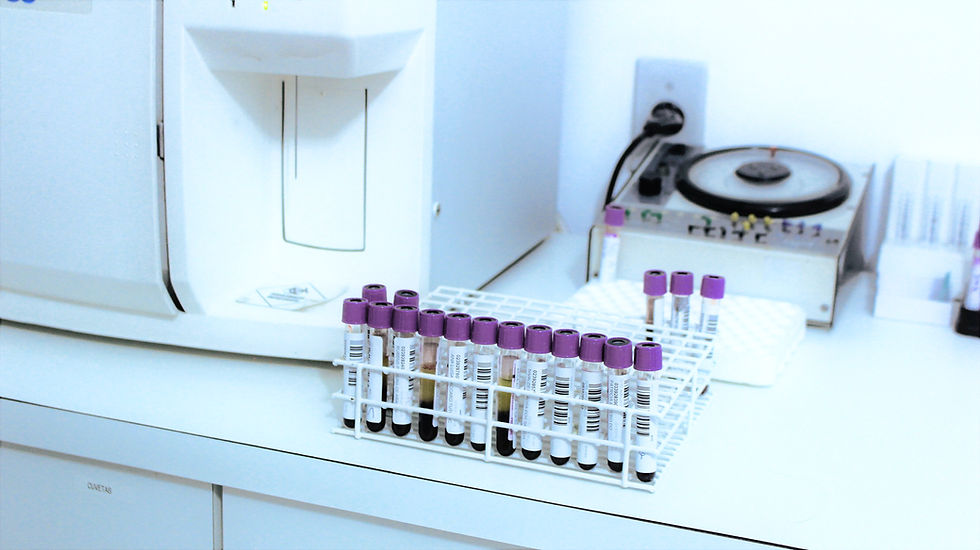
In many medical conditions, biological markers, also known as biomarkers, are commonly used to describe quantifiable biological indicators that can be measured reproducibly and objectively. It comprises a wide range of objective indicators, including molecules, genes, or physical traits that can objectively represent normal biological processes or responses to therapy.
Defining a Biomarker
For an indicator to be used as a biomarker, its performance is determined through rigorous pre-clinical and clinical studies. It needs to be able to sufficiently reflect relevant medical information or answer medical questions of interest. It also needs to be validated in terms of its effectiveness and accuracy in discerning one’s health status.
The main characteristics of a reliable biomarker include:
Sensitivity & Specificity: Accurate identification of true positives (sensitivity) and correct exclusion of false positives (specificity).
Reproducibility: Consistent results can be obtained across different tests and labs
Ease of Access/Practicality: Easily obtained or measured
Reliability: Its presence/absence or level differences should be able to reflect diseases/conditions status
Dynamic Response: For a marker of treatment, the marker should show significant/relevant changes
Categories of Biomarkers
Many different biomarkers can be classified by their application and measurements.
Molecular Biomarkers are measured by sampling of blood, body fluids, or tissues in order to detect specific molecules. These molecules include:
Proteins such as enzymes, antibodies, or antigens, e.g., elevated levels of C-reactive proteins (CRP), may indicate inflammation.
Nucleic Acids (DNA/RNA), such as detecting genetic mutations, aberrations, deletions, and their expression levels, e.g., the KRAS gene mutation may be indicative of a driver in various cancers.
Metabolites, which are small-molecule byproducts from metabolic processes in the body, e.g., glucose and cholesterol levels.
Clinical Measurements which are often non-invasive measurements of body function:
Physical Traits, e.g., weight and height
Vital Signs, e.g., heart rate, blood pressure, and body temperature
Organ Processes, e.g., glomerular filtration rate (GFR) measurement for the kidneys
Imaging Biomarkers are specific data from medical imaging that can highlight structural or functional abnormalities:
Through PET scans, metabolic activities in the brain can be observed for neurodegenerative diseases
With MRI/CT scans, features of tissue abnormalities, perfusion, and the size and dimension of tumors can be observed
Digital Biomarkers are an increasingly important and widely used technology currently, which includes data collected by daily wearable sensors (smartwatches, apps, smartphones, smart devices), e.g., Measurements of heart rate variability (HRV), sleep duration, and daily activity levels.
Beyond classification, the true value of biomarkers lies in their clinical utility across the continuum of patient care.
Importance of Biomarkers
There are various research efforts ongoing to refine known biomarker panels for specific diseases, as well as to identify new biomarkers, absent in certain diseases. This is because biomarkers can be considered as an important biological tool used at different stages in various clinical contexts. Functionally, they can be used or categorized for:
Diagnostic: Detects or confirms a disease (e.g., fasting glucose for diabetes).
Monitoring: Measured periodically to assess disease status or treatment response (e.g., HbA1c for diabetes, viral load for HIV).
Predictive: Identifies patients likely to respond to a specific treatment (e.g., HER2 for breast cancer).
Prognostic: Indicates the likely course or severity of a disease.
Safety: Measures potential toxicity (e.g., creatinine for kidney toxicity).
Susceptibility/Risk: Indicates the likelihood of developing a disease (e.g., BRCA1/2).
Biomarkers have become indispensable tools in modern medicine, bridging the gap between biological processes and clinical decision-making. From molecular signatures in blood to real-time physiological data captured by wearable devices, biomarkers enable earlier diagnosis, personalized treatment strategies, and more precise monitoring of disease progression. Furthermore, identifying and optimizing the use of biomarkers can also aid in the development of new and effective therapies. As research advances and technologies evolve, particularly in genomics and digital health, the discovery and validation of robust biomarkers will continue to shape the future of precision medicine. Ensuring their accuracy, reproducibility, and clinical relevance remains essential to maximizing their impact on patient outcomes.
References:
Strimbu K, Tavel JA. What are biomarkers?. Curr Opin HIV AIDS. 2010;5(6):463-466. doi:10.1097/COH.0b013e32833ed177
Macias Alonso AK, Hirt J, Woelfle T, Janiaud P, Hemkens LG. Definitions of digital biomarkers: a systematic mapping of the biomedical literature. BMJ Health Care Inform. 2024;31(1):e100914. Published 2024 Apr 8. doi:10.1136/bmjhci-2023-100914
Colburn WA. Optimizing the use of biomarkers, surrogate endpoints, and clinical endpoints for more efficient drug development. J Clin Pharmacol. 2000;40(12 Pt 2):1419-1427.
Ou FS, Michiels S, Shyr Y, Adjei AA, Oberg AL. Biomarker Discovery and Validation: Statistical Considerations. J Thorac Oncol. 2021;16(4):537-545. doi:10.1016/j.jtho.2021.01.1616
Califf RM. Biomarker definitions and their applications. Exp Biol Med (Maywood). 2018;243(3):213-221. doi:10.1177/1535370217750088
Assessed and Endorsed by the MedReport Medical Review Board


