


Andes Virus: Fact-Checking the Recent Hantavirus Fear
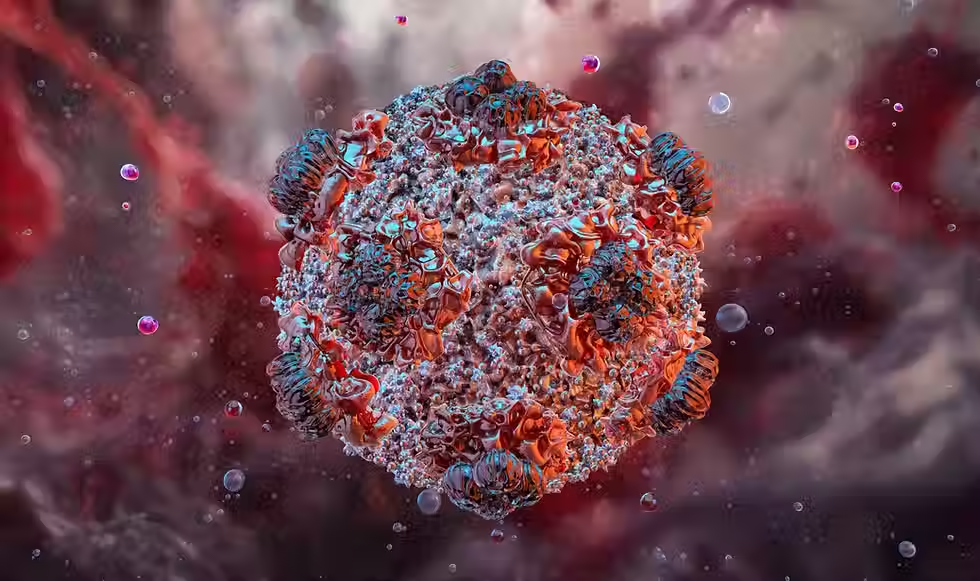
Over the past week, reports of a Hantavirus outbreak aboard a cruise ship in the Atlantic have sparked a familiar wave of “next pandemic” headlines. It is understandable. Terms like “outbreak” and “fatalities” tend to raise alarm. However, a closer look at the situation, particularly the nature of the Andes virus (ANDV), shows that while this is a serious medical concern for those affected, it is not a cause for global panic.
What’s Actually Happening?
The current focus is on the MV Hondius, where a small number of cases have been identified. The strain involved, the Andes virus, is different from the more common Hantaviruses found in North America, which spread only from rodents to humans. What makes the Andes virus notable is that it is the only known Hantavirus capable of person-to-person transmission.
That detail has driven much of the concern, but it needs context.
First, this virus is not airborne in the way people often fear. Transmission typically requires prolonged, close contact with an infected person, often through respiratory droplets in very confined settings. It does not spread easily through the air or ventilation systems like influenza or COVID-19.
Second, the number of cases remains very small. As of May 2026, infections are still in the single digits. Health authorities, including the CDC and WHO, have already intervened, placing the vessel under strict quarantine and initiating contact tracing to contain the situation.
Why It Still Matters
While there is no need for alarm, it would be wrong to dismiss the situation entirely.
Hantaviruses are serious because of their severity. Hantavirus Pulmonary Syndrome (HPS) can progress rapidly, moving from mild flu-like symptoms to severe respiratory distress. It also carries a relatively high mortality rate compared to common seasonal illnesses.
The Andes strain also demands extra caution. Because it can spread between people, even if only under limited conditions, health officials respond aggressively to each case. This level of vigilance is exactly what helps prevent isolated incidents from turning into wider outbreaks.
Why There’s No Need to Panic
For the general public, the risk remains extremely low.
Exposure is highly specific. Unless someone has been in close contact with an infected individual from the ship, or is in certain rural areas of South America where the virus naturally occurs in rodent populations, there is virtually no risk.
There is also no evidence of community spread. The virus has not moved beyond the contained environment of the ship.
Importantly, this is not a new or unknown pathogen. Scientists have studied the Andes virus for decades. Its behavior, transmission patterns, and containment strategies are well understood, unlike truly novel viruses that initially catch health systems off guard.
The Bottom Line
What we are seeing is a high-severity virus with very limited transmissibility. The headlines are not wrong about the seriousness of the disease itself, but they often overlook an equally important point. The containment measures are working.
It is possible, and necessary, to take the situation on the MV Hondius seriously without letting it fuel unnecessary fear.
References
Assessed and Endorsed by the MedReport Medical Review Board

